
Step 1: Review the Storage Arrangement
Make sure you know the fertility treatment procedure, the storage plan that is suggested, and the legal issues surrounding this.
Embryo storage and cryopreservation in India will have to follow the requirements of the Assisted Reproductive Technology (Regulation) Act, 2021. As per the Act, ART clinics will have to take certain consents, maintain proper records of storage, and follow the legal requirements for handling embryos. Questions may also arise about the use of stored embryos after separation, divorce, death, or a request to transfer them to another country. For legal advice on embryo storage, consent, and compliance, contact Fertility Legal Expert. Advocate Neelam Goswami also helps intended parents and clinics with legal issues related to embryo storage, as well as other related legal issues.
Discuss Your Legal Matter →
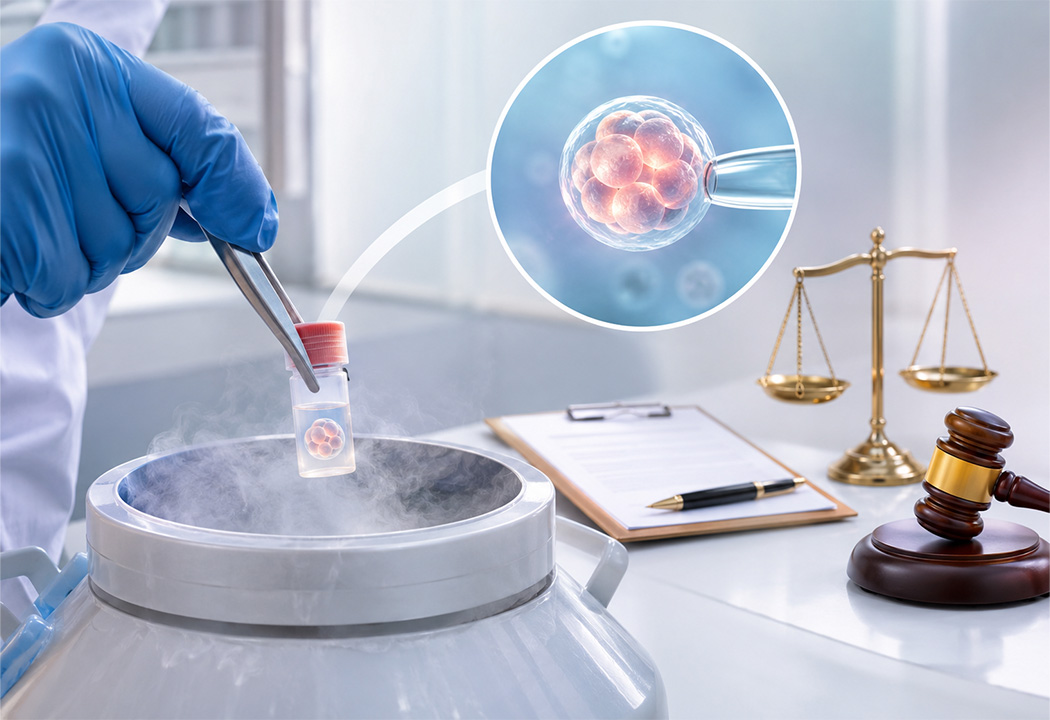
Embryo cryopreservation is a process of freezing embryos for use in future fertility treatment. With this process, individuals and couples can preserve embryos for later use, instead of using them immediately. There are specific laws in India regarding embryo cryopreservation.
According to the laws regarding embryo cryopreservation, there are requirements regarding consent, the conditions of storage, the labeling and identification of embryos, record-keeping, and the procedures for handling stored embryos. ART clinics are obligated to comply with these requirements when storing embryos and when responding to requests for their use.
Fertility Legal Expert helps clinics and their patients (the intended parents) understand their legal obligations and review the documents about these obligations.
The Assisted Reproductive Technology (Regulation) Act, 2021, in conjunction with the ART Rules, 2022, is the legislation that regulates embryo banking and cryopreservation in India.
Section 22 relates to written informed consent for ART procedures. This section includes specific written consent and instructions regarding cryopreservation in case of death or incompetence of the patient.
Section 28 relates to storage of reproductive materials and their appropriate storage requirements. The maximum permissible period for storage of a donor’s gametes/embryos is set at ten years in the Act. After the expiry of such period, the material is to be allowed to perish or donated to an organization established under the Act for research purposes.
Section 29 restricts the sale, transfer, and use of gametes, zygotes, and embryos, but there are exceptions to this prohibition as stated in the law. Section 30 regulates the use of human gametes and embryos for purposes of research outside India and for transferring the gametes and embryos for research.
An ART clinic will have to be certain of all the laws and amendments to the laws before making any decisions regarding storage of embryos. A fertility lawyer can help the clinic/individual in doing so.


Indian law sets requirements for the storage and handling of embryos. ART clinics must obtain the required consent and follow the applicable rules before storing embryos for future use.
The main requirements include:
Section 28 sets a maximum storage period of 10 years for donors’ gametes or embryos. Clinics should check the applicable law and consent forms for guidance on what to do once the storage period ends.
Legal guidance provides clinics with storage responsibilities and identifies gaps in their procedures.
ART clinics must maintain proper documents for embryo freezing and storage. These records help show that the required consent was obtained and that the embryos are being handled according to the applicable rules.
The required documents may include:
The documents should properly reflect the instructions given by the individuals themselves. The generic consent form will not be appropriate for all situations, especially where there are concerns regarding death, incapacitation, divorce, or future considerations.
The clinics must make sure that all the documents are accurate and complete and use the prescribed forms when necessary. A legal review will enable the identification of any gaps and uncertainties. Fertility Legal Expert can assist clinics and prospective parents in reviewing the storage agreement and the consent forms.

Embryo storage, transport, and release must follow the applicable legal requirements. ART clinics should check the relevant documents at each stage and maintain proper records.
Make sure you know the fertility treatment procedure, the storage plan that is suggested, and the legal issues surrounding this.
Review the necessary consent form and make sure that the necessary people understand the storage arrangement. The instructions for the case of death or incapacity must be provided when necessary according to the law.
Prepare or review storage agreements, consent forms, and other required paperwork. Check that the information is complete and the instructions are clearly recorded.
The required information for the identification of the embryo, its storage and any related information must be kept. The duration of storage will also have to be noted.
Before embryos are used or released, check the relevant consent documents and instructions. If the people involved disagree, the clinic should review the legal position before taking further action.
If embryos need to be moved to another clinic or country, check the applicable restrictions and permission requirements before arranging the transfer.
Record any authorized use, movement, and other transactions involving the embryos. Retain all necessary instructions and authorizations, if required.
The Fertility Legal Expert will help the clinics and expectant parents review their legal position at each step of the process.

Legal issues may come up between separating or divorcing couples regarding what to do with the embryos that have been preserved. Legal issues might also come up where there is the death or incapacitation of one party. One party might want to go ahead with assisted reproduction treatments, while the other might disagree.
According to the ART Act, special consent and instructions need to be in writing for the preservation of embryos upon death or incapacitation. It depends on the legal situation in the case at hand.
Some common concerns include:
Clinics should not act on conflicting instructions without checking the legal position. A fertility legal expert can review the consent forms, storage agreements, and related documents to help explain the available legal options.
Problems can arise when ART clinics do not follow the rules for embryo storage, consent, or record-keeping. Missing documents and unclear instructions can create difficulties when embryos need to be used, transferred, or handled after a change in circumstances.
Common issues include:
The ART Act contains provisions governing embryo storage and restricting certain activities involving human embryos. Legal consequences may apply to offences covered by the Act, depending on the nature of the violation.
If a clinic receives a notice or identifies a possible compliance problem, the matter should be reviewed promptly. Legal advice can help clarify the issue and the options available under the law.

ART clinics need to review their embryo storage documentation to see whether the necessary procedures have been carried out.
This process can reveal missing documents and potential non-compliance issues. The exact requirements vary depending on the particular services offered and the situation of the case.
We at Fertility Legal Expert are ready to assist ART clinics with the review of storage documents and consent procedures according to the law.
ART clinics treating NRI or foreign patients must also comply with the Indian rules that apply to embryo storage and transfer. A patient's nationality or residence outside India does not automatically remove the clinic's legal responsibilities.
The ART Act restricts the transfer and use of human gametes, zygotes, and embryos, subject to the exceptions provided by law. The transfer of a person's own embryos for personal use requires permission from the National Board under the applicable legal framework.
The applicable ART Rules and amendments set out requirements for certain transfers of a person's own gametes and embryos for personal use. The required forms and supporting documents depend on the type and purpose of the transfer.
A clinic should not assume that embryos can be transferred abroad simply because a patient has relocated or another clinic has agreed to receive them. The applicable legal requirements and permissions should be checked before transport is arranged.
Fertility Legal Expert can guide clinics and intended parents on the legal issues involved in international cases. The process depends on the type of material being transferred, the purpose of the transfer, and the applicable requirements.


Fertility Legal Expert offers legal services for embryo storage documents, consents, and transfer requirements. ART compliance is also covered. Advocate Neelam Goswami has been practicing law since 2001 and is a member of the Bar Council of Delhi. Apart from general legal services, her areas of work include fertility, ART, surrogacy, law drafting, and advisory. The focus is on clarifying legal requirements in easy-to-understand language and assisting clinics and intended parents in understanding the legal requirements for their case.
Section 28 of the ART Act prescribes a limit of ten years during which the donor’s gametes or embryos can be stored. Upon expiry of the permissible period, the said material will have to be allowed to perish or can be used for research purposes by donating to a registered organization.
Yes. Written informed consent is mandatory for ART treatments. Apart from that, in case of death or incapacity of the person, written consent and instructions for cryopreservation are also needed according to the ART Act.
In case of separation or divorce, the legal status will depend on the consent forms and the instructions to the clinics, along with other relevant factors such as the circumstances of the disagreement.
There are limitations related to international transfers of embryos as regulated by the ART Act and other provisions. For transferring embryos belonging to an individual, it is necessary to receive the appropriate permission from the National Board.
The clinic is supposed to review the appropriate legislation, consent forms, and instructions on disposal of stored embryos. The ART Act contains information regarding possible scenarios following the expiration of the permitted period of storing embryos.
Fertility Legal Expert provides legal guidance on embryo storage, cryopreservation, consent, and compliance.
Share your legal enquiry and the service you need. We will get back to you about the next steps.